July 2026
I will be presenting my work on Illuminations using LightBenders at the Third International Conference on Holodecks on July 24 at USC.

Hi! I am a PhD candidate in Computer Science at the University of Southern California. I'm a member of Flying Light Specks (FLS) Lab supervised by Shahram Ghandeharizadeh. My research spans multimedia, computer graphics, robotics, and human-computer interaction, with a focus on Flying Light Specks (FLS): miniature drone swarms as a new display medium.
I research and engineer the full stack of these systems, from decentralized localization algorithms (including SwarMer, Swarical, and Swarzure) to custom drone platforms with lighting and vision capabilities (LightBenders), as well as authoring tools for creating drone-based illuminations.
My work has been published at venues including ACM Multimedia and SIGGRAPH, where my poster Indoor Drone Visual Effects Using LightBenders received 2nd Place in the SIGGRAPH 2026 Student Research Competition. I expect to complete my Ph.D. in late 2026.
I will be presenting my work on Illuminations using LightBenders at the Third International Conference on Holodecks on July 24 at USC.
I will be a speaker at the SIGGRAPH 2026 Frontiers Workshop on Dronevision, Holodecks, and Spatial Computing Using Swarms of Flying Light Specks on July 23. Check out my talk on LightBenders: Bringing Naked Eye Graphics to the Physical World via Drone Mounted LED Rods.
I won Second Place in the ACM SIGGRAPH 2026 Student Research Competition for my graduate work on Indoor Drone Visual Effects Using LightBenders!
My paper, LightBenders: Authoring and Illuminating Line Drawings, has been accepted to the ACM Multimedia 2026 Main Track.
My poster, Indoor Drone Visual Effects Using LightBenders, was selected as a semi-finalist for the ACM Student Research Competition (SRC) presented by SIGGRAPH 2026.
ACM Multimedia 2026
Hamed Alimohammadzadeh,Shahram Ghandeharizadeh
We present LightBenders and an end-to-end architecture for authoring, representing, and illuminating line drawings using a swarm of LightBenders. A LightBender is a drone with a two-segment actuated rod, each carrying an array of individually controllable RGB LEDs. The architecture provides two authoring tools, a Blender add-on and LB-Author, that spatially stagger LightBenders to prevent downwash-induced flickering. An IRB-approved user study (n = 21) shows that the system's maximum misalignment of 10.1 mm is perceptually acceptable, with a median quality rating of 8/10.
SIGGRAPH Posters 2026
Hamed Alimohammadzadeh,Shahram Ghandeharizadeh
This paper presents seven visual effects for illuminations using a swarm of LightBenders, where each drone uses an actuated LED rod as its lighting primitive. Per-LED color and brightness, rod segment angles, and 3D position are configurable and can be synchronized across the swarm to create dynamic effects. We implement these effects in a Blender add-on, enabling artists to design, visualize, and edit visual effects for arbitrary words and line drawings before illuminating them with LightBenders.
ACM Multimedia 2025
Hamed Alimohammadzadeh,Shahram Ghandeharizadeh,Federico Cunico,Joshua Springer
This companion paper provides artifacts and instructions on replicating the experiments in the ACM Multimedia 2024 paper entitled "Swarical: An Integrated Hierarchical Approach to Localizing Flying Light Specks." Swarm-based hierarchical, Swarical, is a localization technique that enables miniature drones, Flying Light Specks (FLSs), to accurately and efficiently localize and illuminate complex 2D and 3D shapes.
the 3rd International Workshop on UAVs in Multimedia co-located with the ACM Multimedia 2025
Hamed Alimohammadzadeh,Shahram Ghandeharizadeh
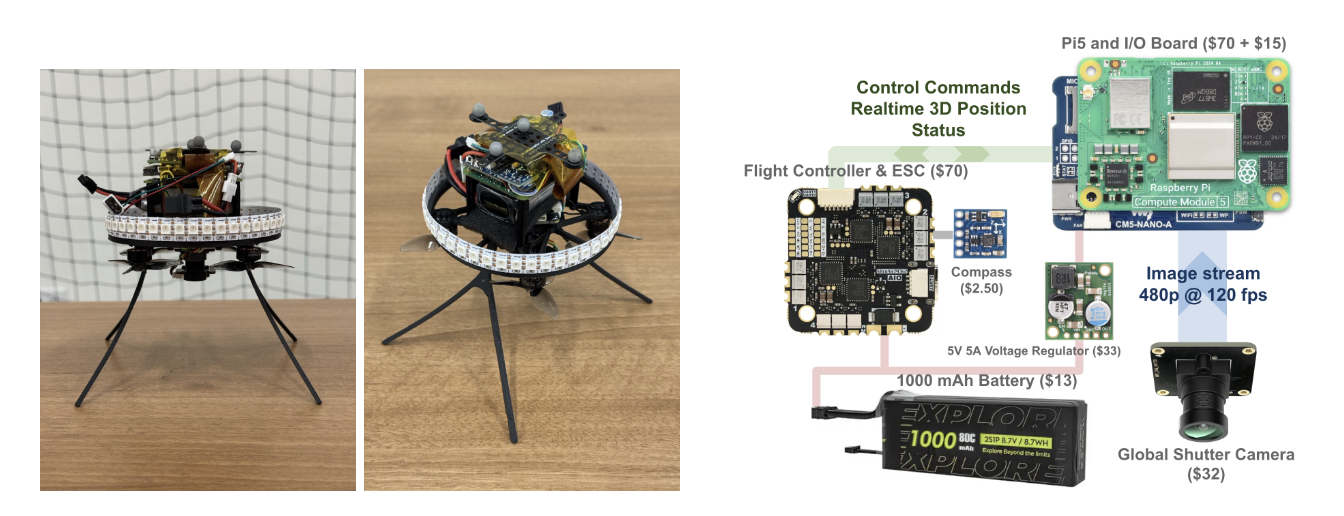
This paper presents the design and implementation of a Flying Light Speck (FLS) to illuminate English letters. The FLS uses its onboard camera and computing to localize and follow a trajectory to illuminate a letter.
ACM Transactions on Multimedia Computing, Communications and Applications Journal 2025
Hamed Alimohammadzadeh,Shuqin Zhu,Shahram Ghandeharizadeh
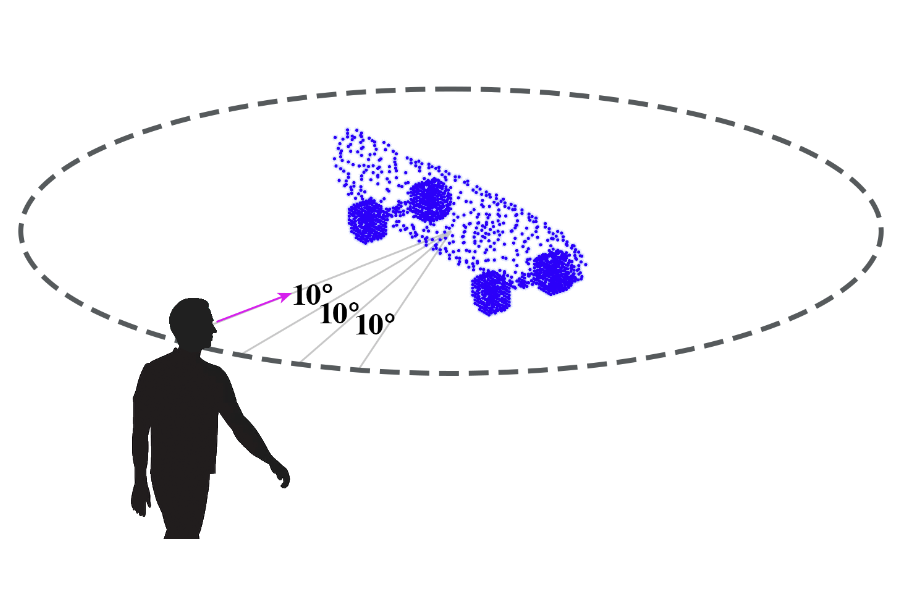
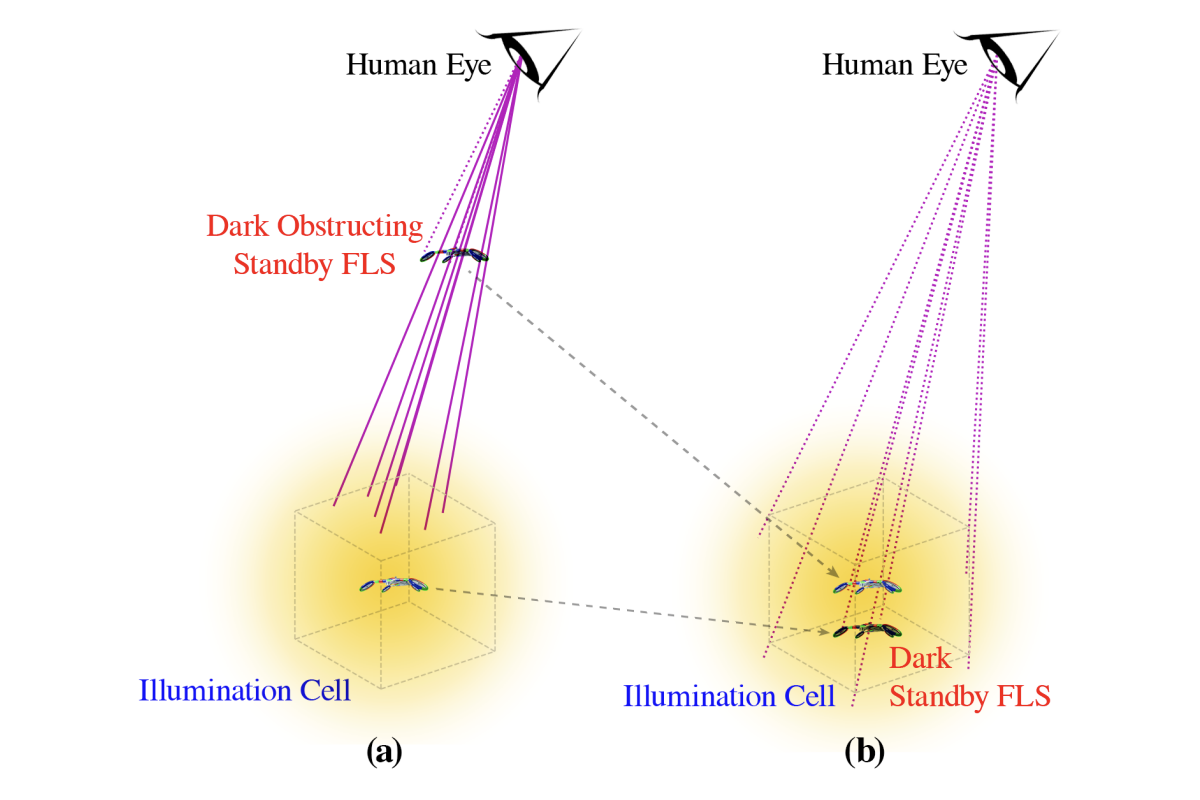
In this paper, we use reliability groups with dark standby FLSs to minimize the duration of time a point remains dark in an FLS illumination. We introduce three techniques to prevent a dark standby FLS from obstructing the user’s field of view, FoV. All three move the FLS out of the user’s FoV.
Holodecks 2024
Hamed Alimohammadzadeh,Shahram Ghandeharizadeh
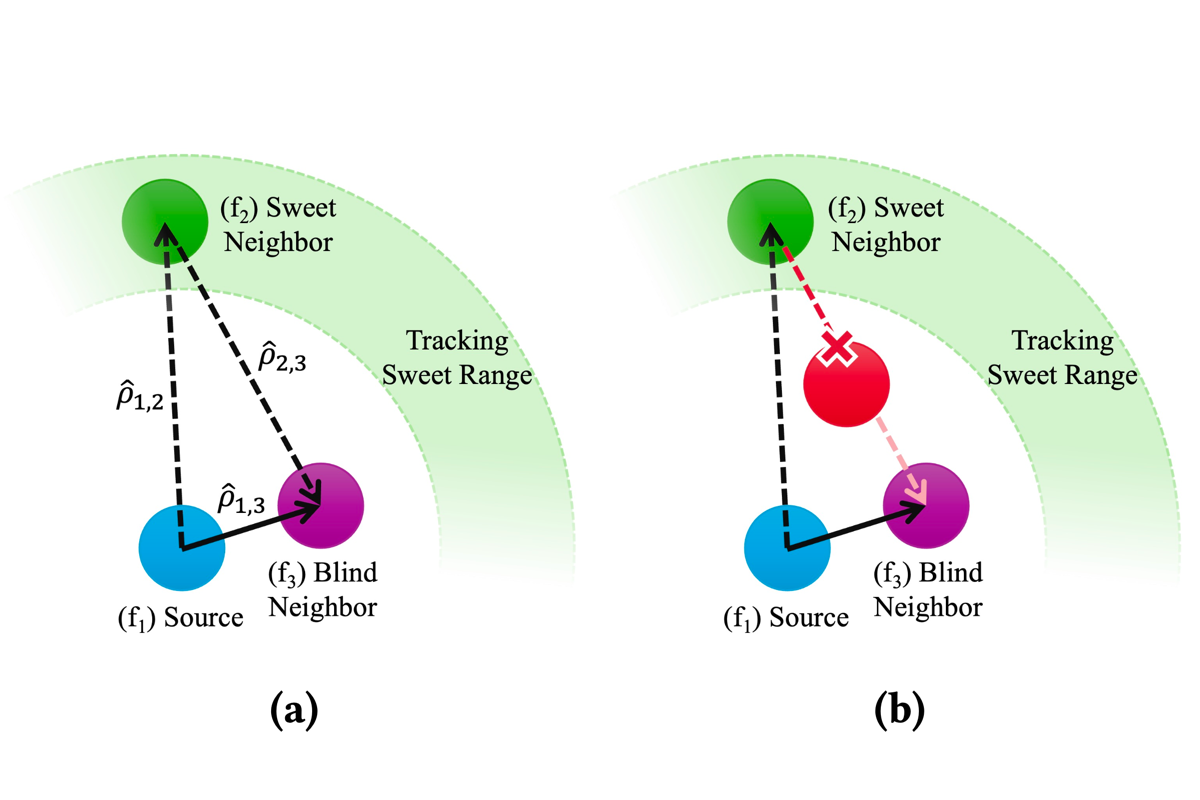
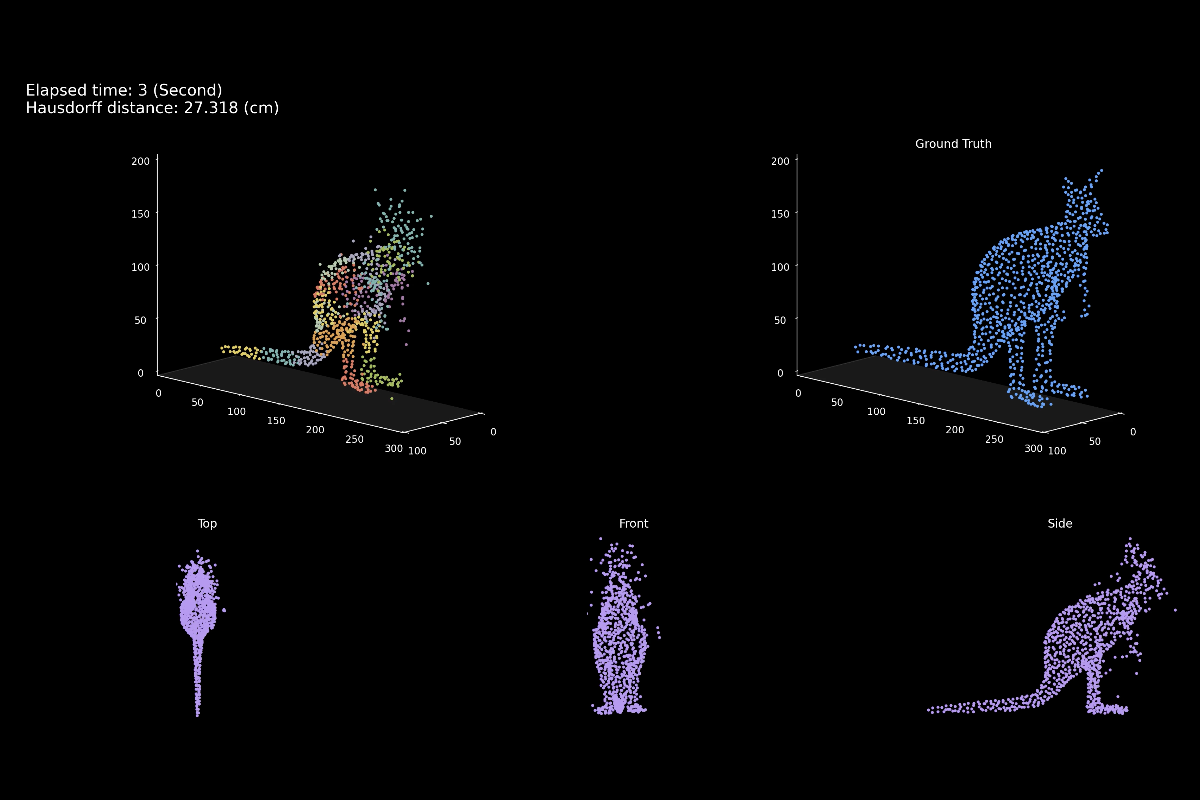
Flying light specks quantify their position relative to one another in order to realize a shape. They utilize tracking devices like cameras to do so which have a sweet range in which they are the most accurate and at some ranges the sensor data is missing. Swazure provides for the physical independence of an FLS from the operating range of its sensor. It solves the missing sensor data using cooperation among FLSs.
ACM Multimedia 2024
Hamed Alimohammadzadeh,Shahram Ghandeharizadeh
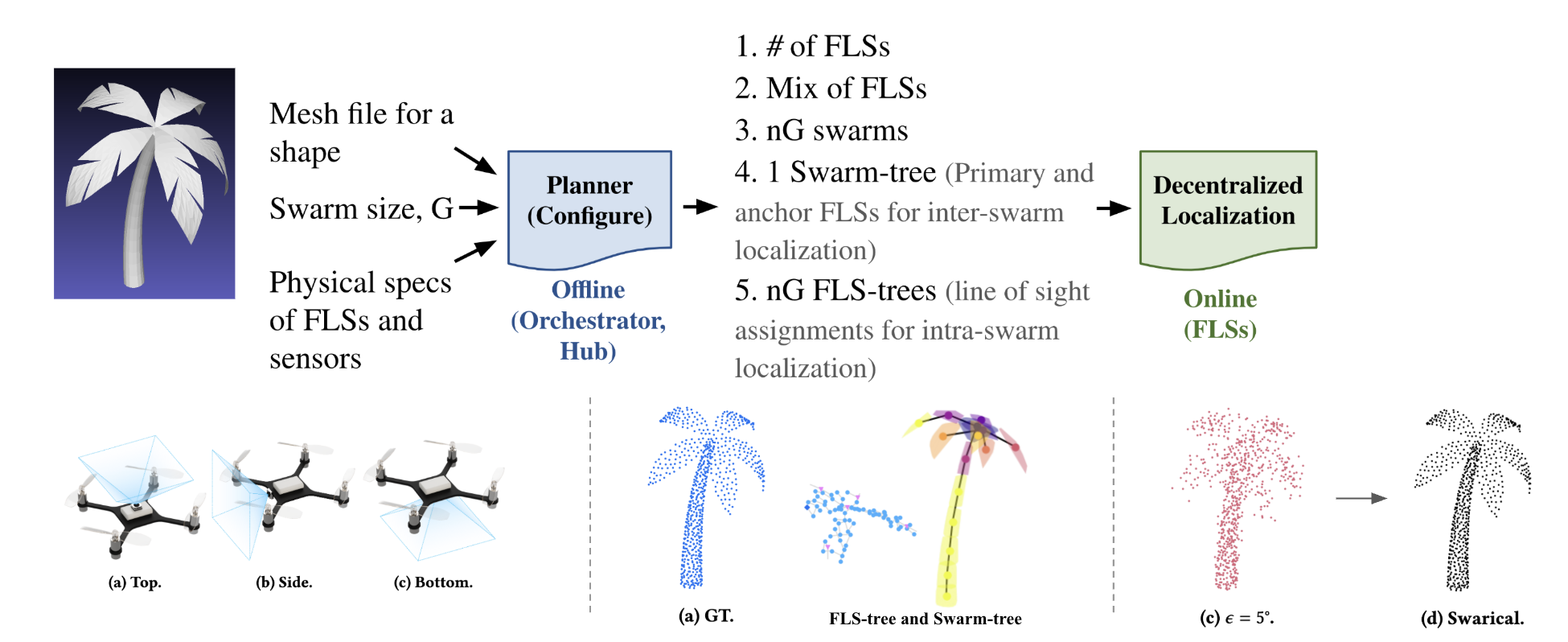
We assume we have a heterogeneous mix of drones each equipped with Aruco markers and a camera facing a different direction. In a relative localization problem drones track one another and adjust their relative position to create a formation or a 3D shape. Here we present a decentralized technique for drones to cooperatively create a 3D shape based on an input mesh file.
ACM Multimedia Systems 2024
Hamed Alimohammadzadeh,Shuqin Zhu,Jiadong Bai,Shahram Ghandeharizadeh
In a 3D multimedia display consisted of Flying Light Specks, failure of FLSs is a norm. Here we introduce dark standby FLSs to replace failed FLSs to increase the reliability of such displays. In addition we compare techniques for hiding the dark FLSs from users' view.
IEEE Haptics Symposium (HAPTICS) 2024
Yang Chen,Hamed Alimohammadzadeh,Shahram Ghandeharizadeh,Heather Culbertson
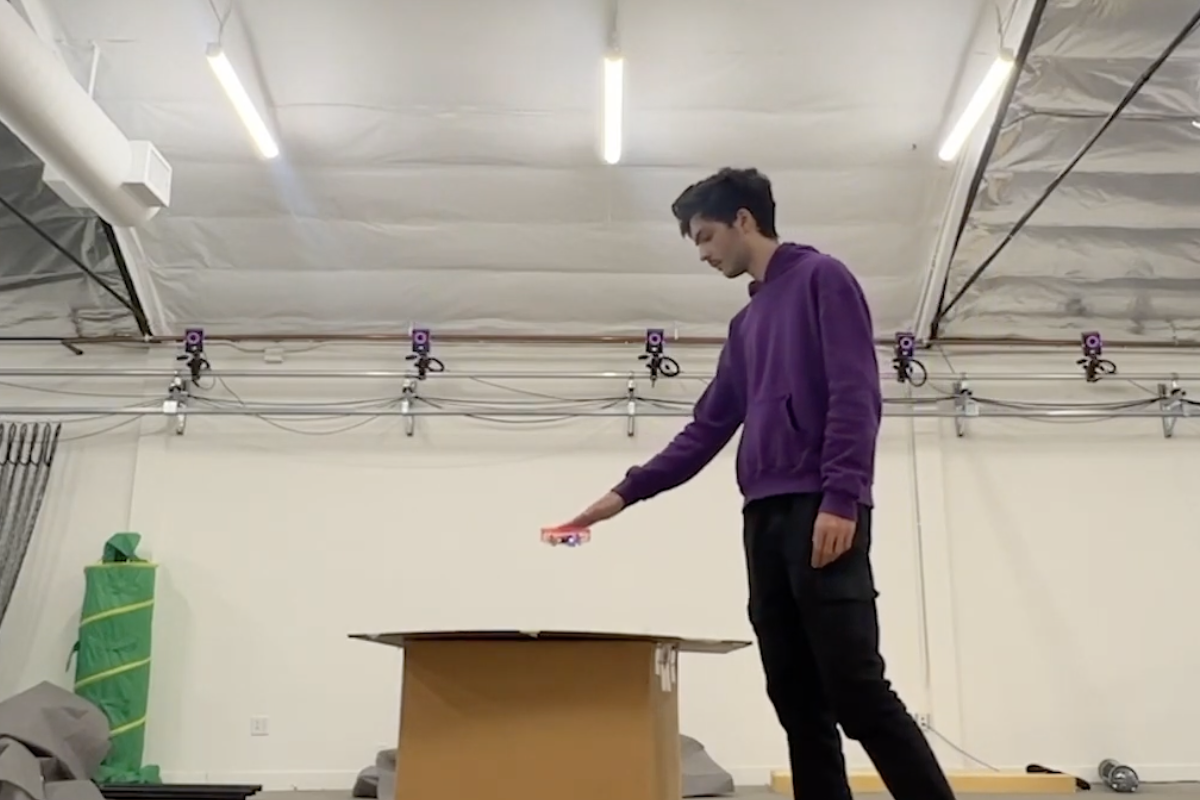
This paper introduces a novel approach using Crazyflie-based quadcopters as haptic rendering devices to simulate virtual stiffness. By designing a specialized cage and implementing control using Crazyswarm and both centralized and decentralized localization techniques, we implemented the smallest dronebased direct-touch encounter-type haptic feedback device. We conducted a user study, which revealed that even with only 21 grams of the force output range, participants could distinguish between the proportional levels, perceiving higher proportional levels as increased stiffness.
ACM Multimedia Asia 2023
Hamed Alimohammadzadeh,Heather Culbertson,Shahram Ghandeharizadeh
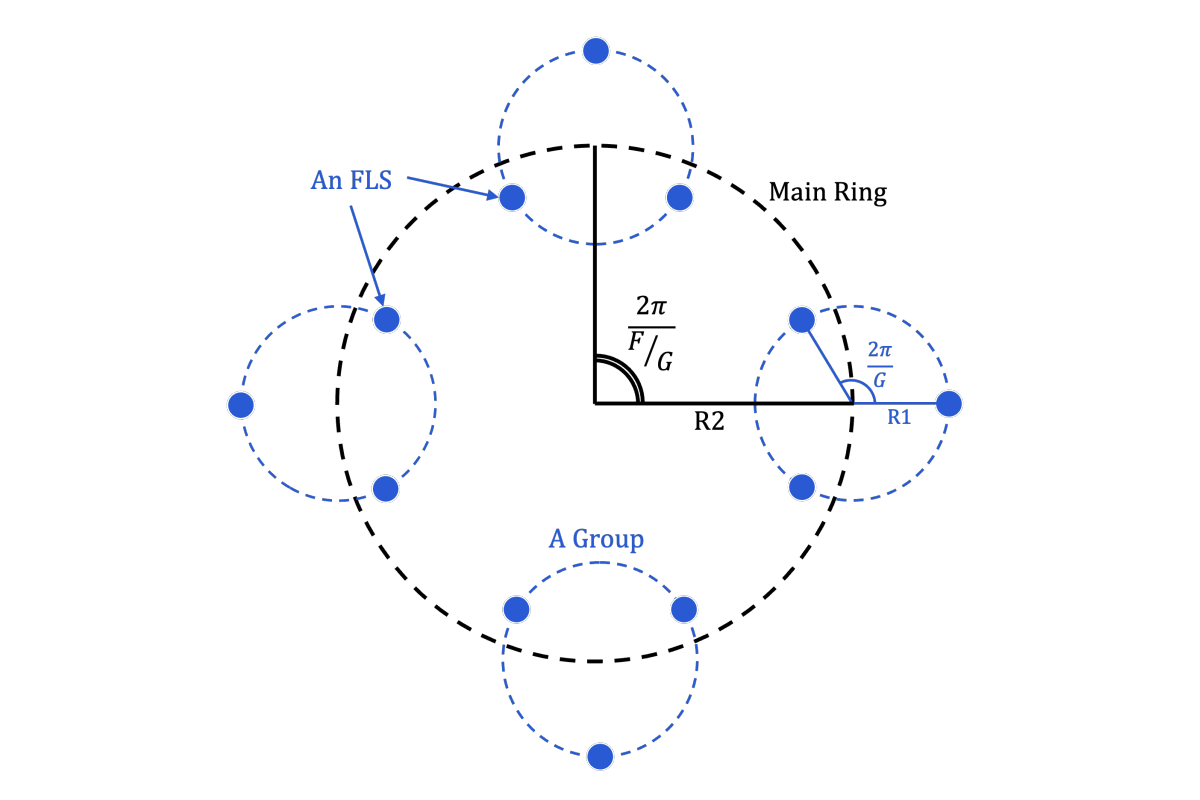
Group formation is fundamental for 3D displays that use Flying Light Specks, FLSs, to illuminate shapes and provide haptic interactions. Groups of G FLSs may implement reliability techniques to tolerate FLS failures, provide kinesthetic haptic feedback in response to a user’s touch, and facilitate a divide and conquer approach to challenges such as localizing FLSs to render a shape. This paper evaluates four decentralized techniques to form groups. An FLS implements a technique autonomously using asynchronous communication and without a global clock.
Holodecks 2023
Nima Yazdani,Hamed Alimohammadzadeh,Shahram Ghandeharizadeh
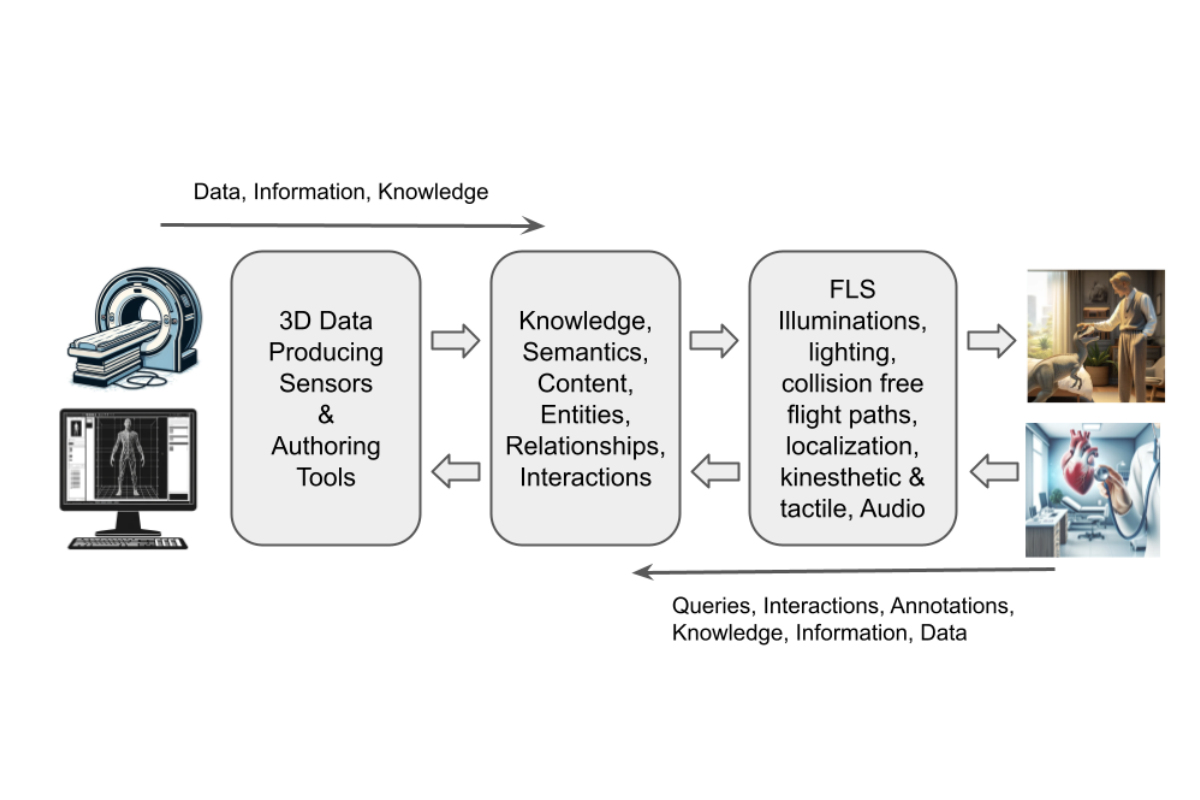
This paper presents a conceptual model for data display via a 3D multimedia displays to enable content-based queries. The model empowers users of an FLS display to annotate the illuminations by adding semantics to the data, extending a multimedia repository with information and knowledge. We present a core conceptual model and demonstrate its extensions for two diverse applications, authoring tools with entertainment and MRI scans with healthcare.
Holodecks 2023
Hamed Alimohammadzadeh,Shahram Ghandeharizadeh
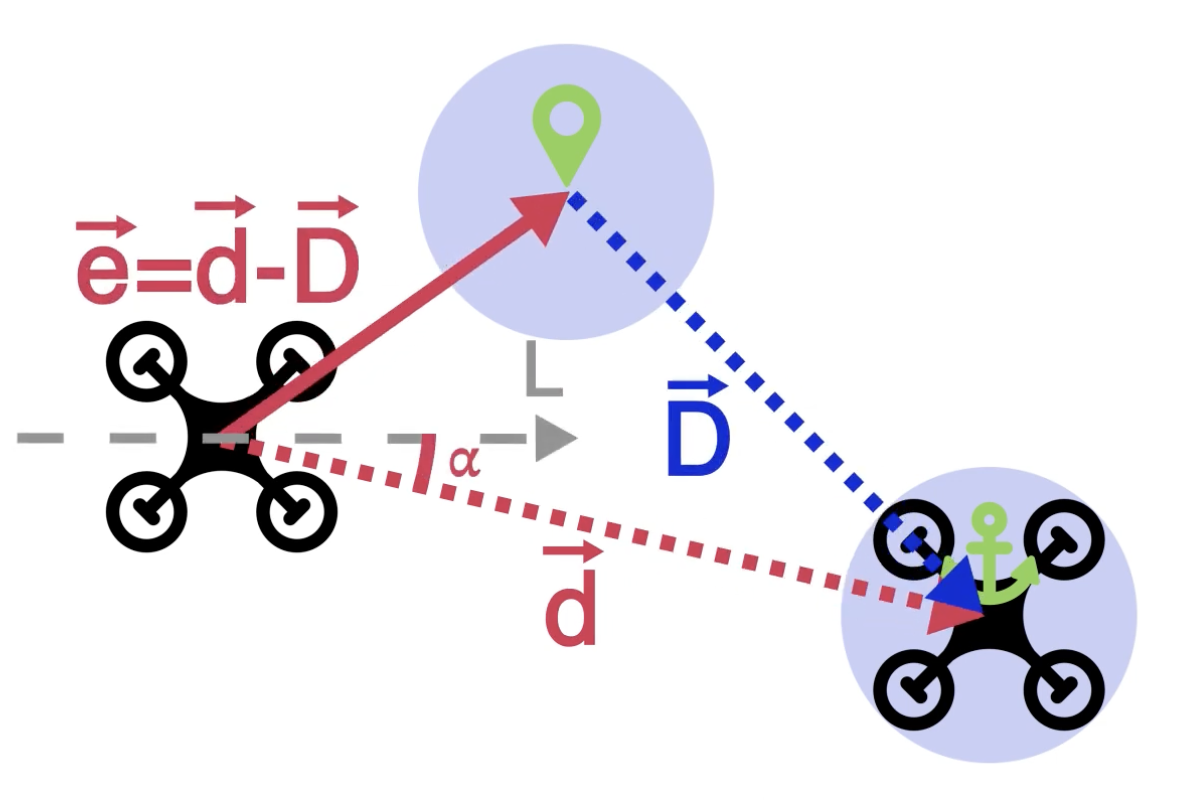
Flying Light Specks are drones equipped with lights, tracking sensors, network, and computation power. To display a point cloud using swarms of Flying Light Specks in a GPS-denied environment, FLSs can position themselves relative to one another. This paper presents decentralized algorithm to localize thousands of FLSs using inter-FLS position measurements.
IROS WS on Human Multi-Robot Interaction 2023
Yang Chen,Hamed Alimohammadzadeh,Shahram Ghandeharizadeh,Heather Culbertson
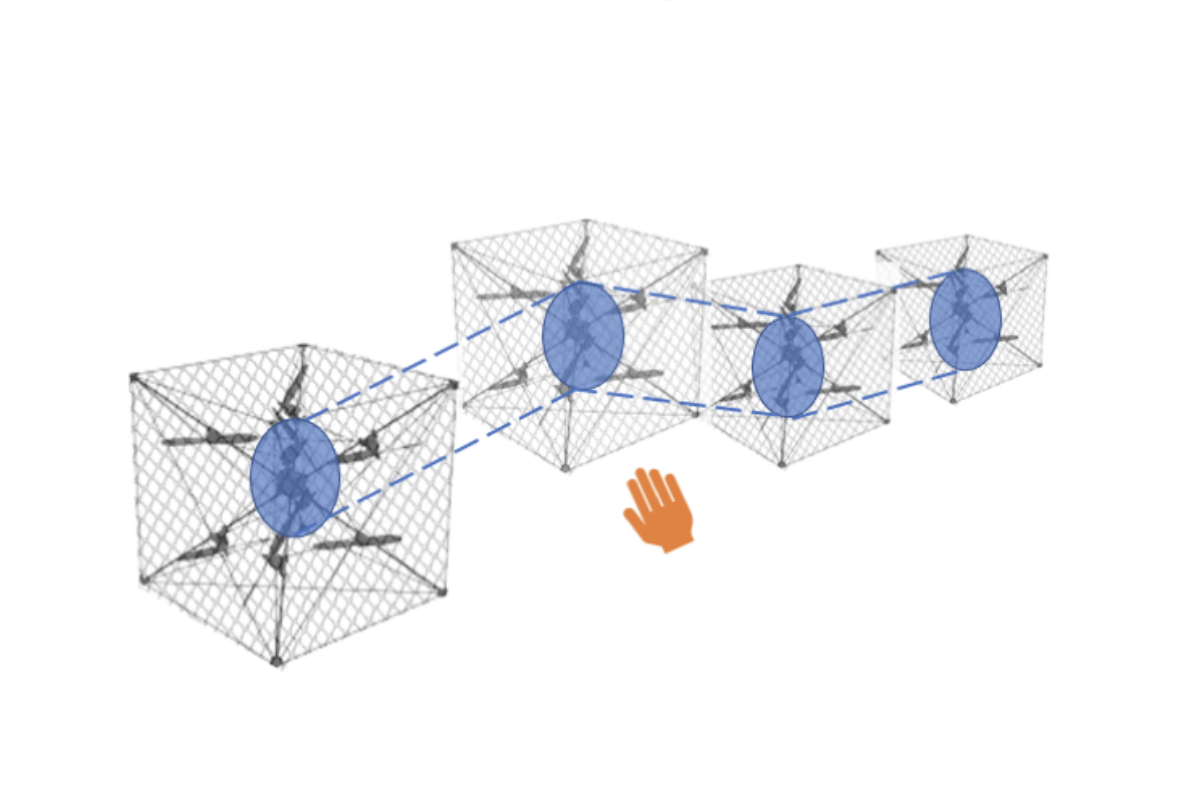
In this paper, we introduce an approach to multi-human robot interaction using omnicopters. These aerial vehicles are able of performing 6 degrees of freedom (6DoF) movements. When used as a haptic device, unlike traditional systems, our method enables haptic rendering without the need for tilt, offering a more intuitive and seamless interaction experience.
Holodecks 2023
Hamed Alimohammadzadeh,Rohit Bernard,Yang Chen,Trung Phan,Prashant Singh,Shuqin Zhu,Heather Culbertson,Shahram Ghandeharizadeh
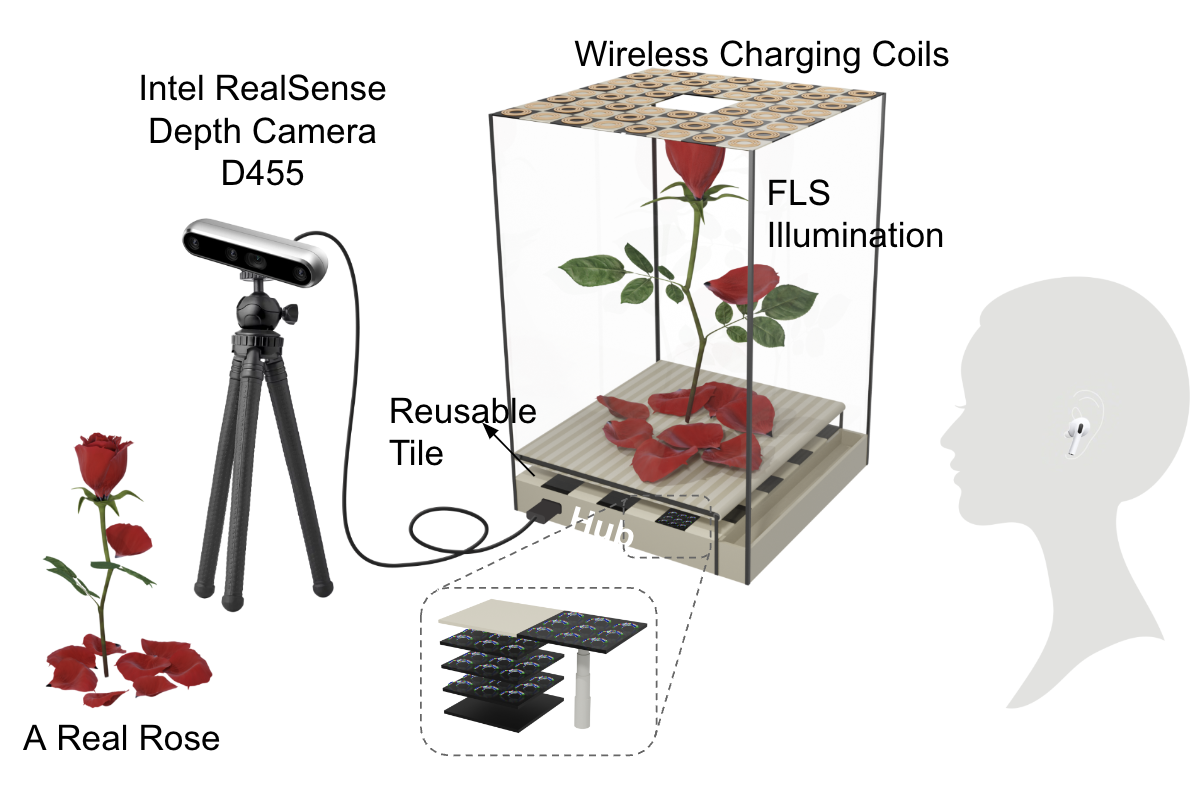
Today's robotic laboratories for drones are housed in a large room. At times, they are the size of a warehouse. These spaces are typically equipped with permanent devices to localize the drones, e.g., Vicon cameras. One may use these laboratories to develop a 3D multimedia system with miniature sized drones configured with light sources. As an alternative, this brave new idea paper envisions shrinking these room-sized laboratories to the size of a cube or cuboid that sits on a desk.
ACM Multimedia Systems 2023
Hamed Alimohammadzadeh,Daryon Mehraban,Shahram Ghandeharizadeh
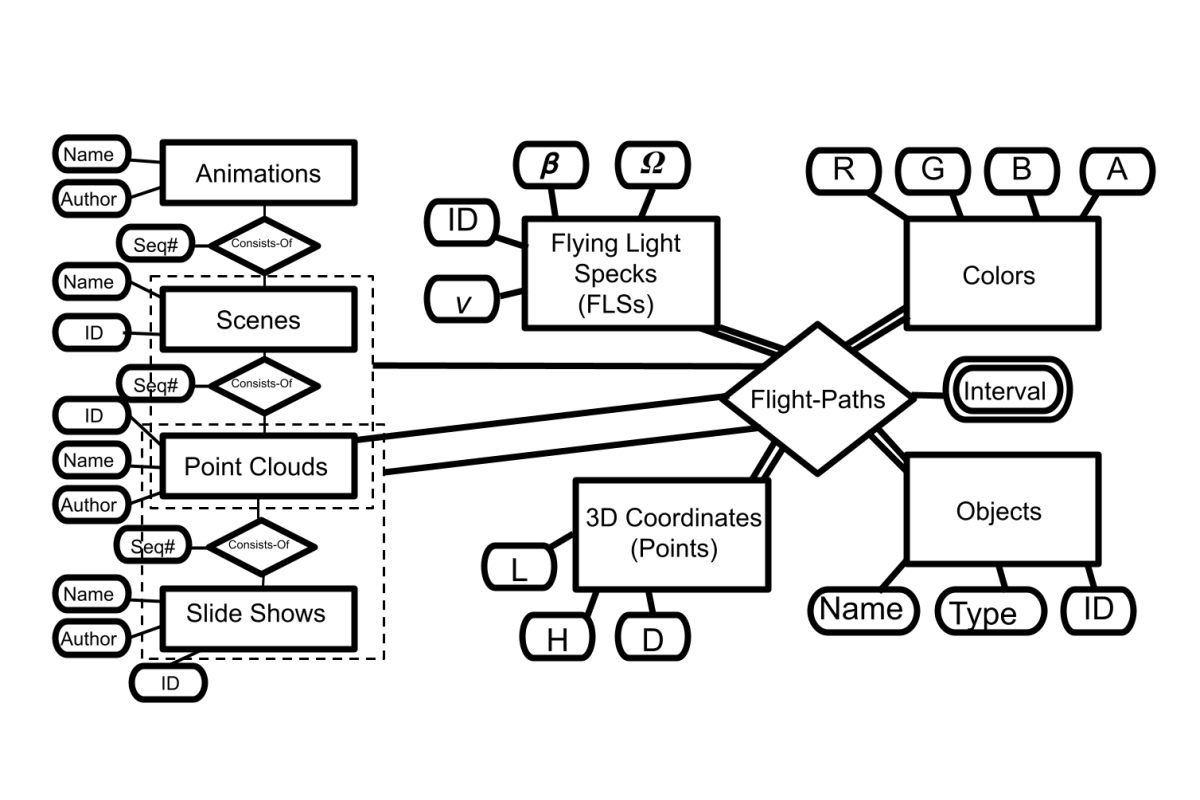
3D multimedia displays using Flying Light Specks illuminate an object in a 3D volume. Here we design and implement these illuminations and their data models. We introduce a conceptual model of drone flight paths to render static, slide, and motion illuminations. We describe a physical implementation of the conceptual model using bag files.
Intelligent Metaverse Technologies and Applications (iMETA) 2023
Trung Phan,Hamed Alimohammadzadeh,Heather Culbertson,Shahram Ghandeharizadeh
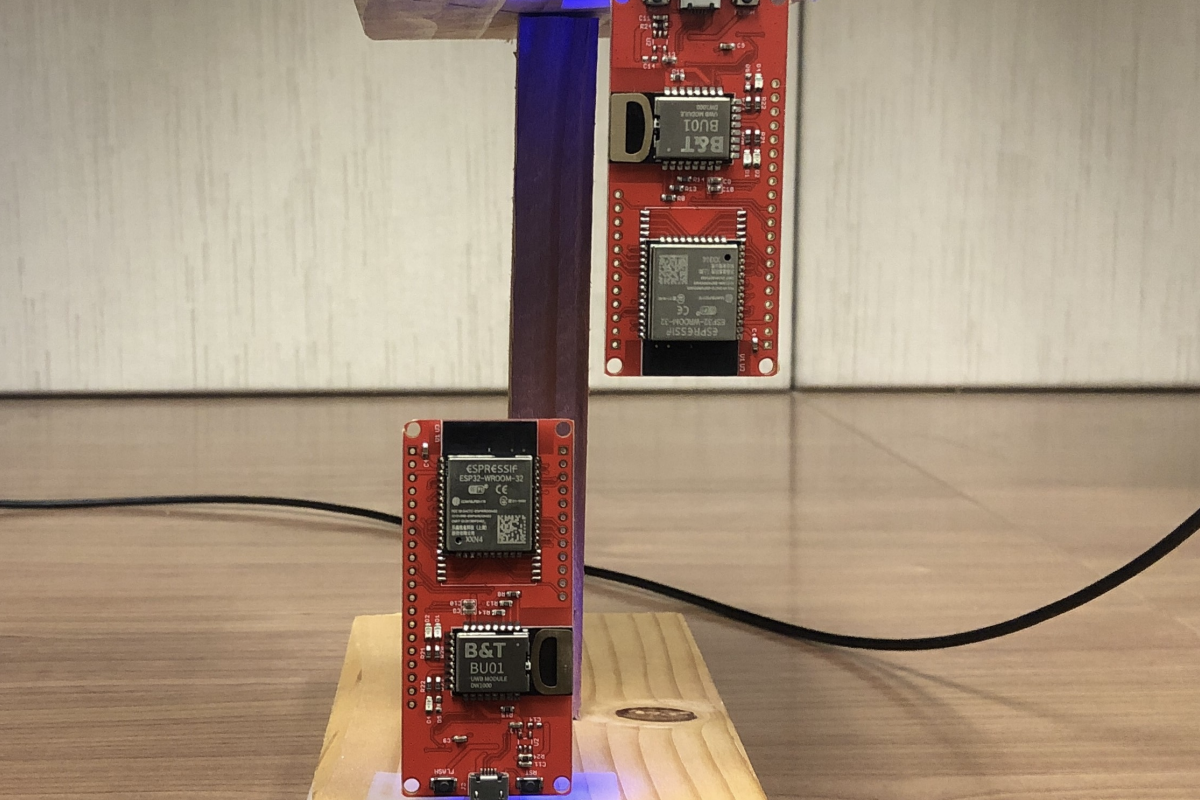
This study evaluates the accuracy of three different types sensors to measure distance using IR, ultrasonic, and UWB. We envision the possible use of these sensors to localize swarms of flying light specks (FLSs) to illuminate objects.
Holodecks 2023
Yang Chen,Hamed Alimohammadzadeh,Heather Culbertson,Shahram Ghandeharizadeh
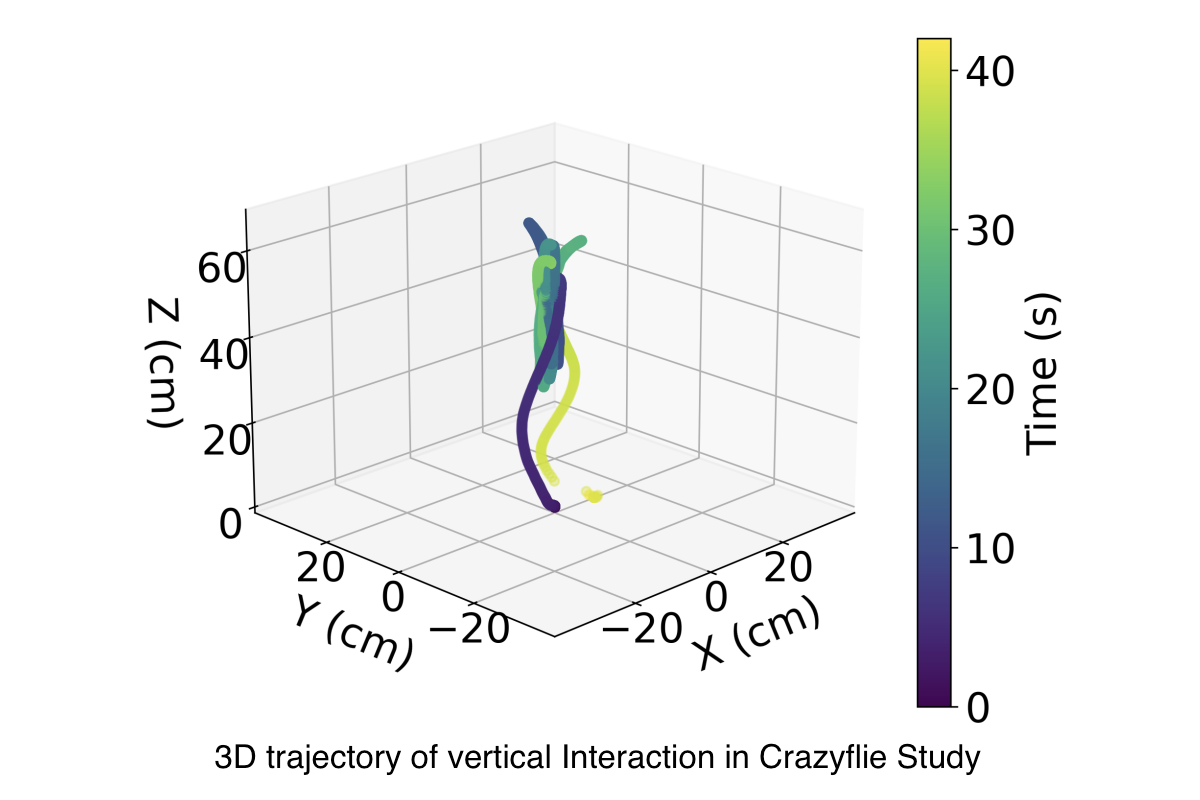
Key requirements of physical human-drone interactions are that the system is stable, safe, and expressive. In this paper, we present the lessons learned from our prior work and discuss implications advancements and limitations of different controllers for physical human-drone interaction.